




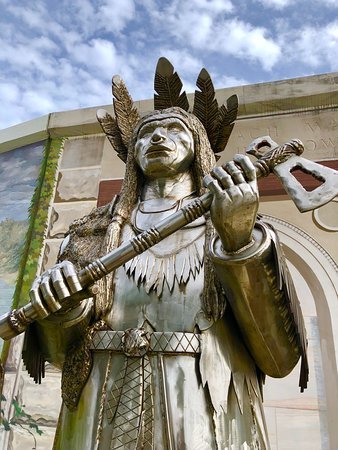
Hey, history buffs! Have you ever heard about a guy who could lead in war and shine in peace talks? That legendary figure is none other than Chief Cornstalk, a remarkable Shawnee leader who juggled diplomacy and conflict like a pro. Chief Cornstalk lived during the tumultuous times of colonial expansion, proving his mettle as a fierce warrior and an eloquent diplomat. So, who was this guy, and why should you care? Let’s take a thrilling journey through his story!
Early Years and Path to Leadership
Picture this: It’s the early 1700s in the lush, sprawling regions of what we now know as western Pennsylvania. A young boy named Cornstalk, born around 1720, begins a journey that would one day see him as a major force among the Shawnee people. Information about his early years is a bit like an unsolved mystery—it exists but is full of gaps. You first hear about him in the historical records in 1764 when he’s traded as a hostage. Whoa, talk about drama right from the get-go!
By the 1750s, Cornstalk wasn’t just any Shawnee; he was a Shawnee war chief. He led his people fiercely in defense of their homeland, orchestrating tactical raids against settlers who increasingly encroached on the Shawnee territory in the Ohio Country. It was during this period that his leadership began to shine, illustrating his tactical genius and strategic foresight.
Leading the Charge: Military Campaigns
Fast forward a bit, and you’ll see Chief Cornstalk at the helm of military campaigns that remind you of the high-stakes action scenes in your favorite epic movies. He played pivotal roles during the French and Indian War, a time when he commanded raids against the advancing white settlers.
Ever hear of Pontiac’s Rebellion? Well, Cornstalk was in the thick of it, launching attacks in regions like Greenbrier, fighting for Shawnee rights and land. Under his command, raids during this period sent a clear message: the Shawnee territory was not up for grabs. This was more than just defense; it was about survival and ensuring the Shawnee presence remained strong in the Ohio Valley.
The Balancing Act: War and Peace
Admit it: Balancing war and peace is tough! Then comes Lord Dunmore’s War in 1774, a conflict between the Colony of Virginia and the Shawnee. Cornstalk found himself defending the Ohio Country with brilliance, even as Virginia forces threatened their existence. The stakes couldn’t have been higher, especially at the Battle of Point Pleasant. Although it was a military setback, Cornstalk took on the role of diplomat effortlessly. His negotiation at Camp Charlotte is legendary—he managed to make peace even when tensions pushed towards disarray. This wasn’t just a win for his people; it was a testament to his eloquence and resolve.
However, peace is fragile, and Cornstalk knew it. During the American Revolution, he advocated for Shawnee neutrality. As the world around him shifted like quicksand, Cornstalk’s efforts leaned towards diplomacy. Ever the strategist, he warned Americans at Forts that other tribes might side with the British, even as he worked tirelessly to secure peace.
The Tragic End: Murder at Fort Randolph
Every epic story has its tragedy, and Chief Cornstalk’s came in 1777. Picture the scene: Cornstalk visits Fort Randolph, hoping to free some detained Shawnee men. Instead of treating him as the esteemed leader he was, Captain Matthew Arbuckle detained him to enforce neutrality. Sounds unfair, right? It gets worse. On November 10, 1777, the situation took a lethal turn. Militiamen seeking revenge for unrelated incidents brutally murdered Cornstalk and his son. It was an outrageous act that echoed through the annals of history—a leader of peace laid low by senseless violence. Despite public horror and efforts by Governor Patrick Henry to bring justice, the culprits went unpunished.
Legacy of Chief Cornstalk
What does a remarkable leader leave behind? Well, Chief Cornstalk’s leadership and vision left an indelible mark on history. As a diplomat, he truly stood out, striving for peace during one of the most turbulent times in American history. The tension between cultures and nations was palpable, yet Cornstalk never deviated from his commitment to diplomacy. His dedication to peace and defense made him a pivotal figure in Shawnee resistance—a leader who could negotiate skillfully while also battling to protect his people.
Cornstalk’s influence continues to echo. His legacy highlights the power of leadership characterized by balance, courage, and wisdom. If you’re captivated by history’s blend of courage and strategy, Chief Cornstalk’s story will remind you of the sheer power of diplomacy—or, perhaps more fittingly, diplomacy wielded like a warrior’s sword.
Conclusion: Remembering a Leader
So there you have it! From a young boy on the fringes of history to a commanding presence on the colonial frontier, Chief Cornstalk exemplified leadership that combined the might of war with the grace of peace-making. His challenges were monumental, his achievements inspiring. Chief Cornstalk’s story matters today because it tells us how one can lead fearlessly, strive for peace ardently, and leave a legacy of courage and wisdom. It’s a tale we can all draw lessons from as we face our own battles and bridges to build.
If you’re curious to explore more insights from history, feel free to check out this intriguing article that dives into another fascinating historical figure. Trust me, there’s always more to discover!
Thanks for joining this exciting exploration of Chief Cornstalk’s incredible life. Stay curious, history adventurers!
Also Read: